
Associate Artists
Meet the associate artists who bring our world to life. Each collaboration is carefully chosen to showcase unique talent, original work, and true craftsmanship. On this page, dive into their worlds and discover their backgrounds and the projects that bring us together.
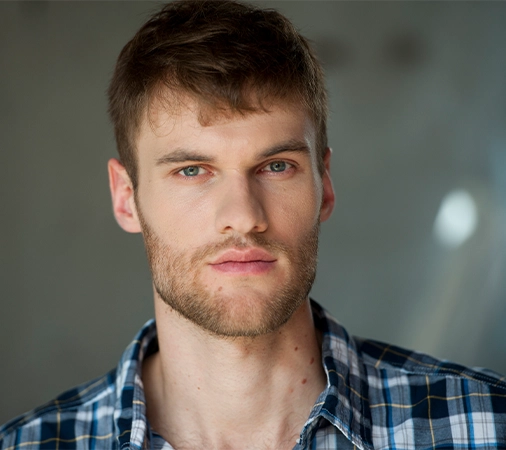
© Sarah Robine
Sylvère Lamotte
Choreographer – Cie Lamento
Born in 1987, Sylvère Lamotte trained in contemporary dance at the Conservatoire National de Région in Rennes and then at the Conservatoire National de Danse in Paris. In 2007, during his final year in the Junior Ballet, he joined the Centre Chorégraphique in Aix-en-Provence as part of GUID (Groupe Urbain d’Intervention Dansée), a program launched by Ballet Preljocaj.
Curious about other artists’ worlds and open to a wide range of influences, Sylvère Lamotte has performed for choreographers with very different styles: Paco Décina, Nasser Martin Gousset, Marcia Barcellos and Karl Biscuit, Sylvain Groud, David Drouard, François Veyrunes, Alban Richard, Perrine Valli, and Nicolas Hubert.
Drawing on each of these experiences and each of these languages, he developed a taste for collective creation and blended influences. In 2015, he founded Compagnie Lamento, where he explores his own artistic paths as both choreographer and performer. Particularly drawn to contact dance, Sylvère Lamotte experiments with ways to vary its forms.
That same year, he created Ruines (2015), followed by Les Sauvages (2017), L’Echo d’un Infini (2019), Tout ce fracas (2021), Voyage au bout de l’ennui and La fabuleuse histoire de BasarKus (2022), and Danser la faille (2023).
Since the company’s early days, he has collaborated extensively with graduating students from CNDC Angers, CNSM Paris, and the Académie Fratellini, creating several repertory pieces for them. He also works in theater, notably on Un furieux désir de bonheur, directed by Olivier Letellier, and on Sacre by Lorraine de Sagazan and Guillaume Poix.
Kader Belmoktar
Choreographer – Cie Käfig
Kader Belmoktar started hip-hop dance in 1993 with the group Culture Street, then joined Traction Avant in 1997. In 1999, Mourad Merzouki asked him to take over the role of Frank II Louise in the show Récital. This encounter led to other creations with Compagnie Käfig: Pas à Pas (2000), Dix Versions (2001), and Corps est graphique (2003). In spring 2004, Kader Belmoktar created his first personal piece, Phases Cachées, directing five of the company’s dancers in a work that examines the weight and power of how others see us.
Over the years, his collaboration with Mourad Merzouki grew into a closer partnership, leading him to assist the choreographer in his creative work, starting with Terrain Vague, then Tricôté and Agwa, as well as on the Défilé parade of the Lyon Dance Biennale. Since 2012, he has worked both as a dancer in Yo Gee Ti (2012), Pixel (2014), Cartes Blanches (2016), and Vertikal (2018) and as artistic assistant on Mourad Merzouki’s 7Steps (2014), Phénix (2022), and Beauséjour and Mosaïk (2024).
Alongside this, Kader pursues his artistic path through teaching. He leads numerous dance workshops for a wide range of audiences and is also involved in training teachers.
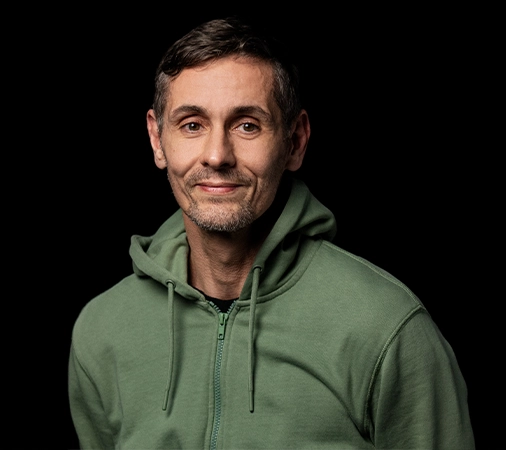
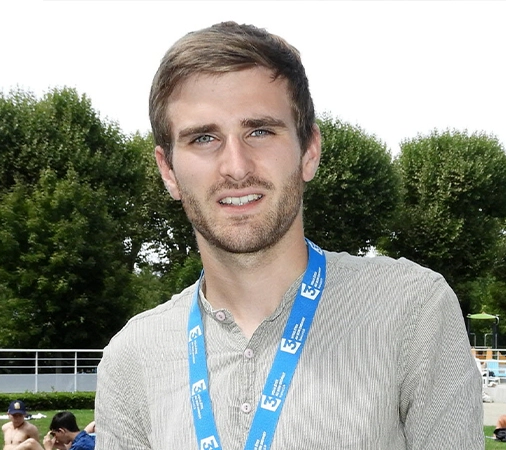
Simon Barral-Baron
Director, videographer, photographer
Simon Barral-Baron is a videographer and photographer based in Isère whose work stands out for its rare sensitivity and unique artistic approach. Passionate about images and movement, he captures life’s moments—fleeting, intense, or simply everyday—with precision and finesse. Through his videos and photographs, Simon explores the beauty of details and the intensity of human emotion, creating works that speak as much through their aesthetics as through their ability to tell stories.
His practice is driven by a constant search for visual harmony, blending light, composition, and mood to create one-of-a-kind atmospheres. Whether he is capturing the landscapes of Isère, portraits, or scenes from daily life, Simon Barral-Baron manages to grasp the very essence of each subject, with a keen attention to the present moment.
He also stands out for his ability to work on a wide variety of projects, from more personal pieces to documentaries and music videos. For him, every project is a chance to explore new techniques and push the limits of his creativity while staying true to his intimate, contemplative visual style.
Based in Isère, Simon Barral-Baron has become a key figure on the local visual arts scene. His sharp eye and mastery of digital tools allow him to move seamlessly between photography and video, creating works that both surprise and move those who discover them. Through his work, he invites contemplation and reflection, crafting images that leave a lasting impression.
Rémi Dumas
Director, videographer
Rémi Dumas is a talented Lyon-based director known for his creativity and his distinctive approach to filmmaking. Passionate about human stories and raw emotion, he has made a name for himself with his signature visual style and his ability to capture the truth of every moment.
Since his early days, he has explored a range of film genres, from documentary to fiction, with a preference for intimate, profound stories. With particular attention to art direction and storytelling, Rémi Dumas creates films that move audiences and raise awareness.
His artistic vision relies on meticulous directing, where light, framing, and sound come together to heighten the characters’ emotions. He likes to question the world around him and seeks to tell stories that resonate deeply, always putting the human element first in his projects.
Having collaborated with many artists and industry professionals, Rémi Dumas has established himself as a committed and innovative director, always looking for new challenges. His work is an invitation to explore the invisible and dive into inner worlds, with a sensitivity all his own that blends modernity and poetry.
As a Lyon-based filmmaker, he enriches the local film scene while proudly championing French independent cinema.
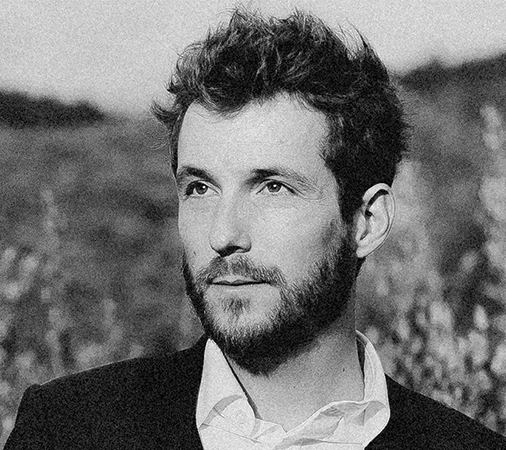
Omar Sosa
Cuban pianist and composer
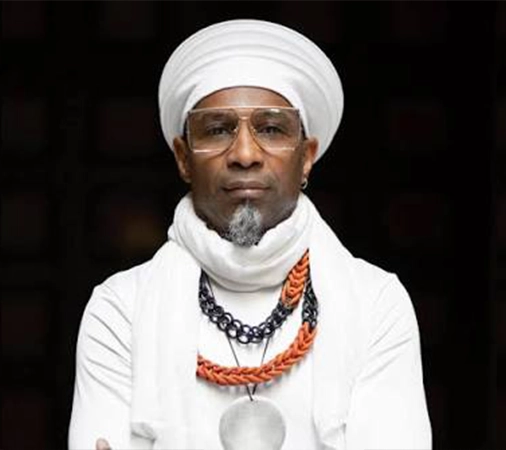
Omar Sosa is one of the most innovative and genre-defying artists on today’s jazz scene. His music blends Afro-Cuban traditions, global rhythms, modern jazz harmonies, and electronic textures with rare freedom. This explosive mix allows him to shape a world that is at once ancestral, urban, and deeply spiritual—one that has earned him six GRAMMY Award nominations and two BBC Radio 3 World Music Award nominations. He follows in the footsteps of artists such as Monk, Coltrane, and Jarrett while radically breaking free from them. Born in 1965 in Camagüey, Cuba, Omar Sosa trained at the Escuela Nacional de Música in Havana. His music reflects a vision of a world without borders. Since 1997, he has released more than 18 albums on the California label Otá Records, building a body of work as vast as it is eclectic. In 2003, he won the award for Afro-Caribbean Jazz Album of the Year for Sentir, a moving work that combines spirituality, improvisation, and exploration. The following year, the Jazz Journalists Association in New York nominated Mulatos for its Latin Jazz Awards—an album mixing Cuban jazz, Latin grooves, French chanson, North African trance music, and European folk. In 2015, he met Stracho Temelkovski, who opened for him as a solo act. A strong musical bond grew between the two, and they have invited each other to perform ever since—as in 2017, for Stracho Temelkovski’s carte blanche at Opéra Underground in Lyon. Their duo project, The Afro-Balkan Experience, led to several concerts and a digital EP, Live in Seynod, in 2020.
Jean-François Baez
Accordionist
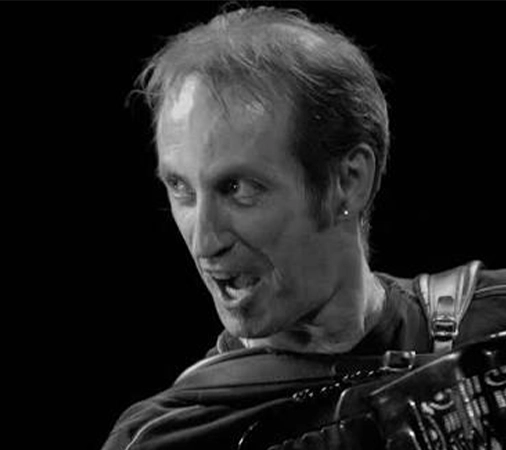
Born in 1958, Jean-François Baez comes from a family of musicians. He started playing the accordion at age 7 and studied at the Lyon Conservatory, where he earned an advanced-level medal in music theory. In the early 1990s, he turned to improvised music and jazz, and in 1995 he joined the ARFI collective, where he remained until 2002. There, he took part in many productions, including Sabado Domingo with the group Baron; Samedi Festin d’Oreille, a musical and culinary show; and Paris Girls, a show blending film and music commissioned by Ciné Mémoire for the Auditorium du Louvre. During this period, he recorded Louis Sclavis’s album Danses et autres scènes. In 2000, he met modern juggling master Jérôme Thomas. Together they created Duo, an improvisation-based show and a tribute to the freedom to play, create, and interact with the audience, which toured more than 40 countries. At the same time, he took part in the creation of Cirque Lili, set to music by Guy Klucevsek. In 2013, he and Jérôme Thomas created Forest, for which he wrote the original score; the piece premiered at Les Nuits de Fourvière. In 2000, he joined Jazz Action Valence and has since been developing a method on “the accordion and improvisation.” In 2003, he formed the Jean-François Baez Trio with Pascal Berne and Jean-Charles Richard, performing original compositions at numerous concerts and festivals in France and abroad. He recorded the album Nikita, distributed by Harmonia Mundi. Since 2015, he has been part of Stracho Temelkovski’s Sound Braka project, including a three-year residency starting in 2023 commissioned by Jazz à Vienne. In 2023, he recorded his solo album Dilemme, featuring original compositions.
Jean-Charles Richard
Saxophonist
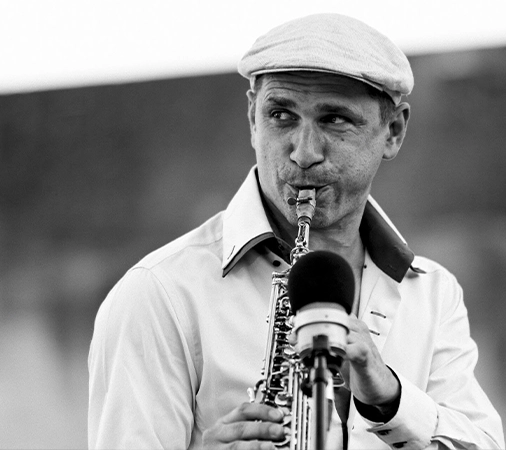
An adventurous musician, Jean-Charles Richard completed a dual program at the CNSM in Paris, where he unanimously won first prize in classical saxophone and earned an advanced diploma in jazz. He holds teaching certifications in both classical and jazz saxophone as well as a diploma in music analysis, and he heads the specialized jazz and improvised music program at the CRR de Paris and at the Pôle Supérieur Paris – Boulogne-Billancourt.
Drawn to extremes, he chose to focus on the soprano and baritone saxophones. His curiosity about every corner of music has led him to perform with classical orchestras (Orchestre de Paris, Orchestre des Prix du CNSM), big bands (George Russell, Antoine Hervé, Jean-Loup Longnon), street brass bands (La Bête a bon dos), and pop singers, and to work alongside contemporary composers (Karlheinz Stockhausen, Thierry Escaich, Alain Margoni).
He brings his talents as a performer, composer, and improviser to many collaborations with Dave Liebman, Didier Levallet, David Patrois, Bernard Struber, Jean-François Baëz, Claudia Solal, Eric Löhrer, Didier Ithursarry, Daniel Humair, Stracho Temelkovski, and more.
His first album, the solo record Faces, released in 2006 on Herrade / Fairplay-Anticraft, made a splash (ffff from Télérama, Jazzman’s “Choc du mois”). His second album, Traces, recorded with Peter Herbert and Wolfgang Reisinger, won the Grand Prix Jazz from the Académie Charles Cros. Since 2006, he has led numerous orchestras whose repertoires sit at the crossroads of jazz and classical music: Gil Evans’s Sketches of Spain with David Liebman as guest soloist, Claus Ogerman’s Cityscape, Jean-Marie Machado’s Impressions, and Martial Solal’s Newdecaband with the Lyon Opera Orchestra.
Ashraf Sharif Khan
Pakistani sitar master
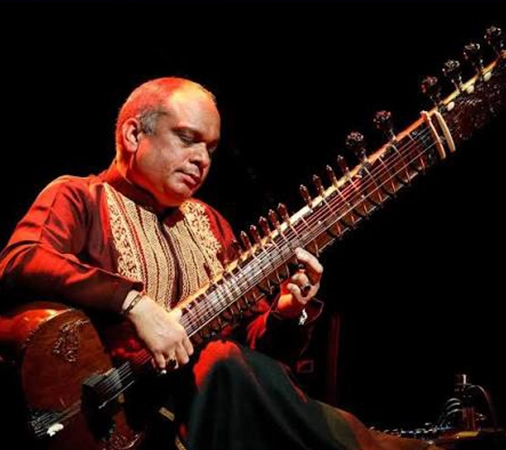
Ashraf Sharif Khan was born in 1969 in Lahore, Pakistan, the son of the renowned sitar master Ustad Muhammad Sharif Khan Poonchwala. Like his father and grandfather, Ashraf Sharif Khan belongs to the illustrious Poonch Gharana school of traditional sitar.
His music combines astonishing technical skill with flawless musical expression; it transcends regional borders and speaks to everyone. “I believe music is the perfect medium for expressing emotion,” he explains. After his first public performance at age eleven, Ashraf toured all over Pakistan. He has received several awards: in 1990, the Khwaja Khurshid Anwar Award and the Hazrat Amir Khusrau Award; in 1992, he was selected to represent Pakistan at the International Sound Celebration Festival in Louisville, Kentucky; and in 1997, he received the Kelaniya Award from the University of Colombo (Sri Lanka). In 1999, he performed at the prestigious Medina Festival in Tunis, at Sugar Hall in Okinawa, Japan, at Symphony Space in New York, and at the Cairo Opera House in Egypt.
Since 2000, he has lived mainly in Hamburg and Oslo. Concerts in cities across Europe alongside many international musicians have led to new projects in jazz and world music.
Mix ô ma prose
Slam poet
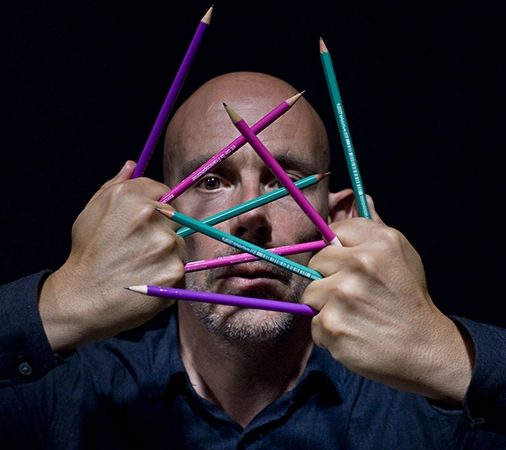
Pencil slung over his shoulder and words firing like a machine gun, Mix Ô Ma Prose has a style all his own—no makeup, no sugarcoating what the crowd expects—cutting through empty talk without needing to rap. His lines steer clear of clichés so we can get by with awareness and trust in one another, no competition, no straitjacket, so that everything comes together for a full house. He has been sharing this energy and passion since 2002 on countless slam stages, in polyphonic shows with La Tribut du Verbe, in slam and improvised writing workshops, and through editorial work with Les Polysémiques. He has also published two books of aphorisms with Cactus Inébranlable Éditions.
Founded in 2005, La Tribut du Verbe is a slam poetry company built around Cocteau Mot Lotov and Mix Ô Ma Prose, two founding members who have been on the Lyon slam scene since its beginnings in January 2002 at Le Bistroy, on the slopes of La Croix-Rousse.
La Tribut du Verbe is a member of the LSF (Ligue Slam de France).